-
Global Markets/AI & Tech Finance
The Other Half of the Yen Intervention: Inside the Exchange Stabilization Fund
2026. 8. 5.
Table
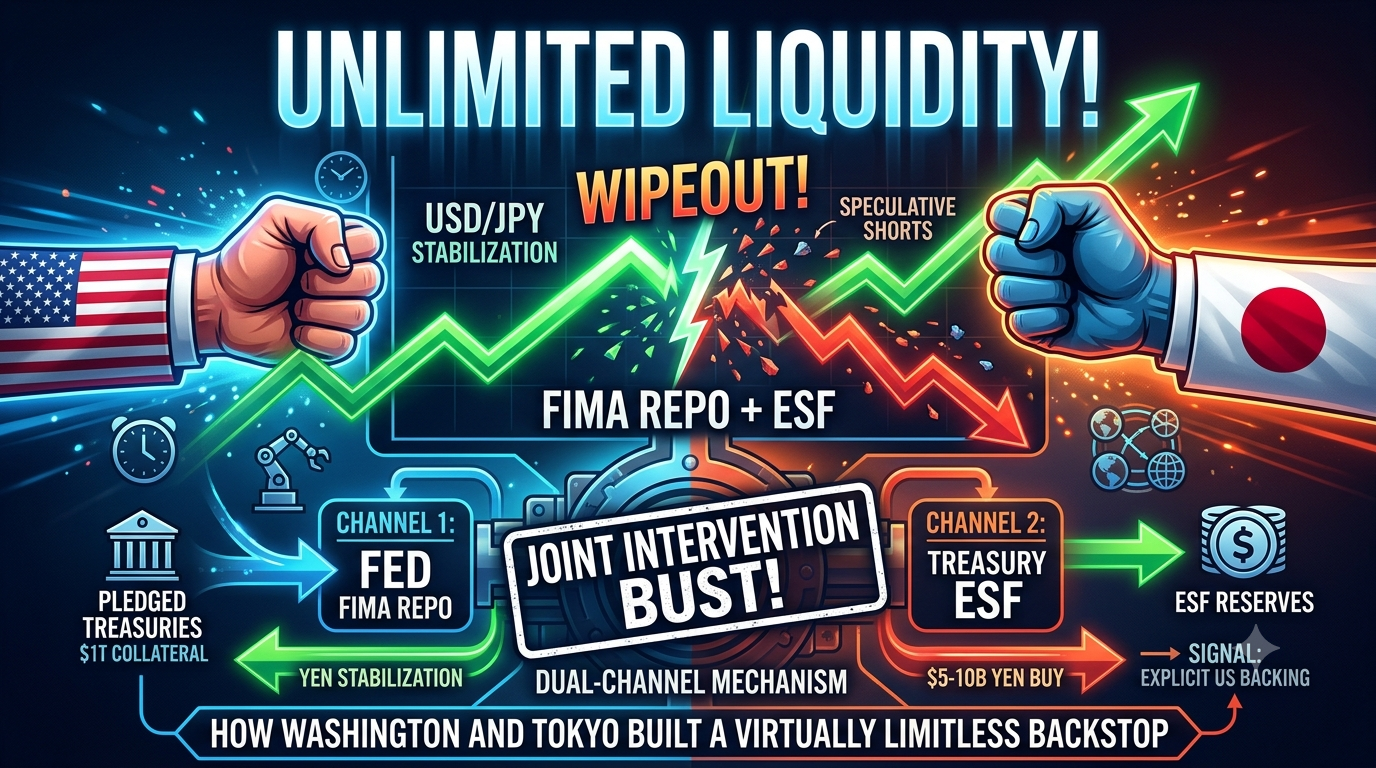
반응형Japan's US Treasury holdings created a structural bottleneck for any Yen-supporting intervention: to buy Yen, authorities need Dollars, and the traditional way to raise them — selling US Treasuries on the open market — risks spiking US bond yields and drawing political friction with Washington. A previous post covered how the FIMA Repo Facility solved half of this problem. This post looks at the other half: the Exchange Stabilization Fund (ESF), and how the two tools work together to give the intervention what markets are reading as virtually unlimited liquidity backing.
Table of Contents
- The US Treasury Dilemma
- The Exchange Stabilization Fund
- FIMA Repo Facility: A Quick Recap
- Implications for the Federal Reserve's Balance Sheet
- Bottom Line
The US Treasury Dilemma
The Mechanism
To strengthen the Yen, central banks need to execute a Yen-buy, Dollar-sell order in FX markets — which first requires sourcing Dollars.
Bessent's Leaked Memo and the Hidden Tool Behind the Yen Intervention 반응형The Traditional Constraint
Japan holds over $1 trillion in US Treasuries. Selling these bonds on the open market to raise Dollars increases bond supply, pushes prices down, and drives US Treasury yields higher.
Why This Is a Problem for Washington
Rising US borrowing costs in a delicate macroeconomic environment are politically and economically unacceptable, which makes outright Treasury liquidation a non-starter for any large-scale intervention.
The Exchange Stabilization Fund
What the ESF Is
The Exchange Stabilization Fund is an emergency liquidity fund managed directly by the US Department of the Treasury, holding mixed foreign currency reserves including Euros and Yen.
How It Was Used
A leaked memo from Treasury Secretary Scott Bessent outlined a strategy in which the US Treasury tapped its own ESF reserves to buy an estimated $5–10 billion worth of Yen directly. This detail matters because it signals explicit, direct US backing for Yen stabilization — not just Japan acting alone with US-facilitated tools.
FIMA Repo Facility: A Quick Recap
Alongside the ESF, Japan drew on the Federal Reserve's FIMA Repo Facility, pledging its US Treasuries as collateral at the New York Fed to borrow Dollars temporarily rather than selling them outright. This left the Treasury market undisturbed while still supplying Japan with the Dollars needed for intervention. For a full breakdown of how this facility works, see our earlier piece on the FIMA Repo Facility mechanism.
Implications for the Federal Reserve's Balance Sheet
A Temporary, Dual-Channel Expansion
Drawing on the FIMA facility temporarily swells the Fed's balance sheet — assets rise through pledged Treasuries, liabilities rise through issued Dollar credits — while the ESF operates separately through the Treasury's own reserves rather than the Fed's books.
Limited Structural Resistance
Fed officials generally inclined toward balance-sheet reduction, such as Kevin Warsh, might scrutinize any expansion. But because FIMA transactions are short-term repos that unwind once the FX market stabilizes and loans are repaid, the structure presents minimal long-term resistance.
2026.08.05 - [Finance] - How Japan Is Funding Its Yen Intervention Without Selling US Treasuries
How Japan Is Funding Its Yen Intervention Without Selling US Treasuries
The Japanese Yen carry trade is one of the most influential — and most dangerous — mechanisms in global financial markets. When it unwinds suddenly, it has historically triggered some of the sharpest volatility spikes on record, from the collapse of LT
koreanalysis.com
Bottom Line
By combining collateralized repo borrowing (FIMA) with direct currency support from the Treasury's own reserves (ESF), Washington and Tokyo built a framework for aggressive FX intervention without disrupting the US Treasury market — signaling to speculative short-sellers that this joint intervention carries virtually unlimited liquidity backing.
This article is for informational purposes only and does not constitute investment, tax, or legal advice. Readers should consult a licensed professional before making investment decisions.
반응형'Global Markets > AI & Tech Finance' 카테고리의 다른 글
Korean Stock & Equity Research
Data-driven analysis of Korean listed companies, combining financial fundamentals with supply chain and operations insights. Not investment advice.