-
Korean Equities/Dividend & Value-up
Treasury Stock Cancellation in Korea: Why It Matters for Shareholders
2026. 8. 24.
Table
반응형A share buyback only permanently benefits shareholders if the repurchased shares are actually cancelled — otherwise they remain as "treasury stock" that companies can re-issue later, diluting the very benefit the buyback was supposed to provide. This distinction has become a key marker of genuine Value-Up commitment versus cosmetic capital return announcements. This article is part of our Top High-Dividend Korean Stocks & Corporate Value-Up Strategy guide.
Why Does Cancellation Matter More Than the Buyback Itself?
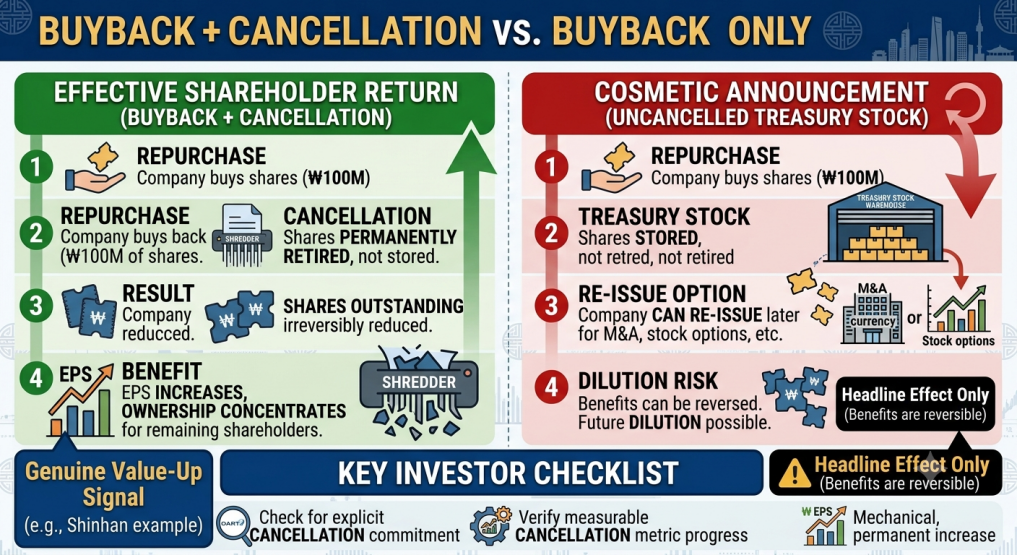
When a company buys back its own shares but keeps them as treasury stock rather than cancelling them, total shares outstanding on paper may look reduced for reporting purposes, but the company retains the option to re-issue those shares later — for executive compensation, M&A currency, or future capital raises — effectively reversing the ownership concentration benefit shareholders expected. Cancellation permanently retires the shares, making the ownership increase for remaining shareholders irreversible.
 반응형
반응형How Are Korean Financials Approaching This Under Value-Up?
Shinhan Financial Group's Value-Up plan explicitly reports execution progress in terms of shares cancelled, not just shares repurchased — noting roughly 25 million shares cancelled by January 2026 as a concrete, measurable achievement under its plan. This kind of explicit cancellation disclosure has become a differentiator between companies making a genuine capital efficiency commitment and those announcing buybacks primarily for headline effect.
⚠️ Not All Buyback Announcements Are Equal
When evaluating a Korean company's buyback announcement, check whether the disclosure explicitly commits to cancellation, and on what timeline. A buyback without a stated cancellation plan carries meaningfully less shareholder benefit than one that does, even if the headline repurchase amount looks similar.
Frequently Asked Questions
Q1. How can I check whether a company actually cancelled its bought-back shares?
A. Check the company's DART disclosures and Value-Up plan updates, which increasingly report cancellation progress as a specific, trackable metric.
Q2. Is there a legal requirement in Korea to cancel repurchased shares?
A. No, cancellation is a voluntary corporate decision rather than a legal mandate, which is exactly why the distinction matters for evaluating genuine shareholder commitment.
Q3. Does cancellation affect a company's earnings per share (EPS)?
A. Yes, permanently reducing shares outstanding through cancellation mechanically increases EPS for the same net income, an effect that uncancelled treasury stock doesn't reliably provide long-term.
반응형'Korean Equities > Dividend & Value-up' 카테고리의 다른 글
Korean Stock & Equity Research
Data-driven analysis of Korean listed companies, combining financial fundamentals with supply chain and operations insights. Not investment advice.