-
Korean Equities/Dividend & Value-up
Korean High-Dividend ETFs: An Alternative to Stock-Picking
2026. 8. 30.
Table
반응형For investors who want exposure to Korea's dividend and Value-Up theme without researching individual banks and industrials one by one, Korea-listed ETFs like the Hanwha ARIRANG High Dividend ETF (161510) — tracking the FnGuide High Dividend Index across companies of all market caps — offer basket-level exposure, though flow data shows these domestic products have recently lost ground to US dividend-focused ETFs among Korean retail investors themselves. This article is part of our Top High-Dividend Korean Stocks & Corporate Value-Up Strategy guide.
What Are the Main Korea-Listed High-Dividend ETFs?
ETF Tracks Notes ARIRANG High Dividend (161510) FnGuide High Dividend Index Launched 2012; ~0.23% expense ratio; all-market-cap dividend payers ARIRANG High Dividend Low Vol 50 (251590) FnGuide High Dividend Low Volatility 50 Index Screens for lower volatility alongside dividend yield KODEX High Dividend Stock Domestic high-dividend basket One of several Samsung Asset Management KODEX products in this category Why Are Domestic Dividend ETFs Losing Ground to US-Focused Products?
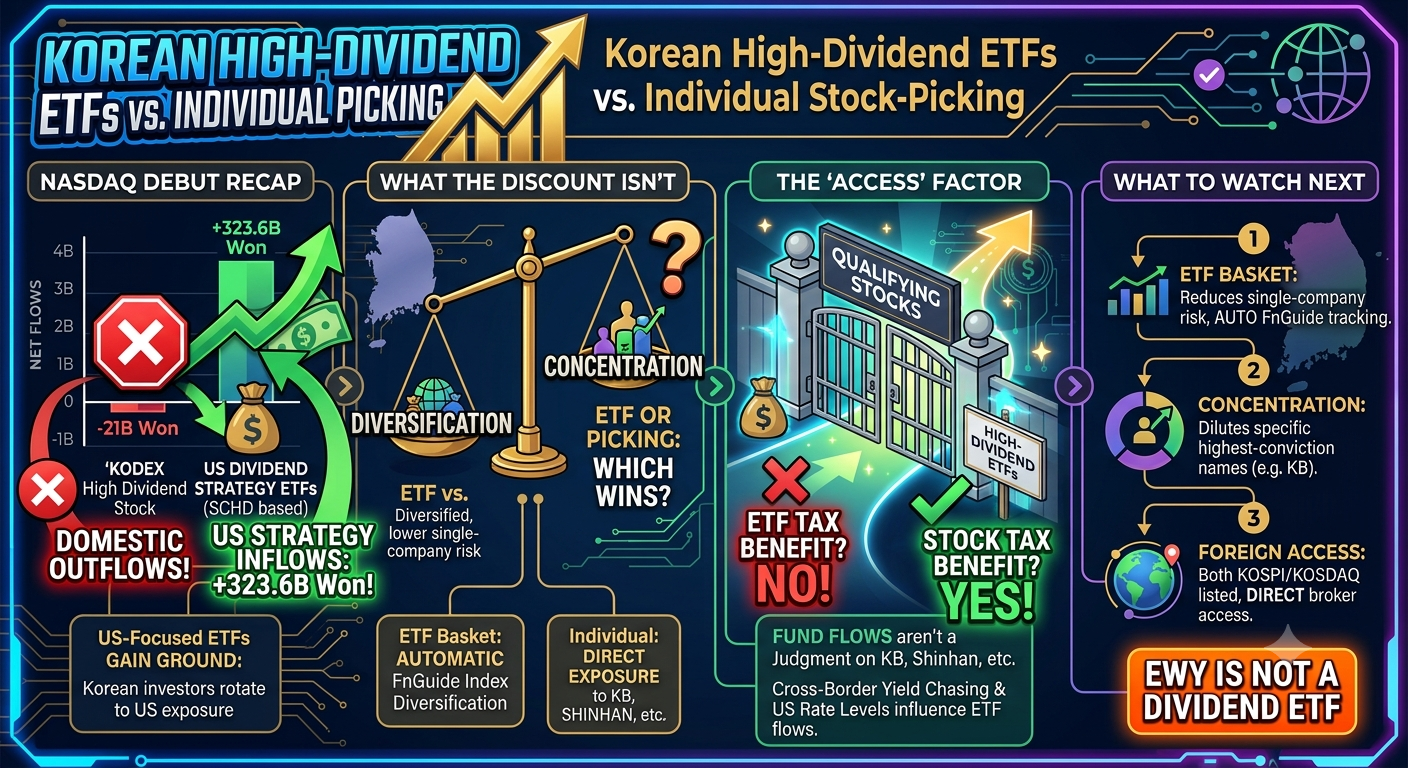
A notable trend as of mid-2026: domestic passive dividend ETFs have seen net outflows — "KODEX High Dividend Stock" recorded roughly 21 billion Won in outflows over one recent month — while Korea-listed ETFs tracking US dividend strategies (branded after Charles Schwab's SCHD approach) pulled in a combined 323.6 billion Won over the same period. This suggests Korean retail investors themselves have been rotating toward US dividend exposure amid rising US long-term rates and market volatility, rather than treating domestic Value-Up dividend names as a clear substitute.
⚠️ Fund Flows Aren't a Verdict on the Underlying Companies
Outflows from domestic dividend ETFs reflect broader asset allocation trends (US rate levels, cross-border yield-chasing) rather than a judgment on whether KB, Shinhan, or the other individual Value-Up dividend payers covered in this guide are executing well. Don't conflate ETF-level flow data with individual stock fundamentals.
 반응형
반응형ETF Basket vs. Individual Stock Selection: Which Fits Your Goals?
A basket ETF diversifies across the FnGuide High Dividend Index's constituents automatically, reducing single-company risk but also diluting exposure to the specific highest-conviction names (like KB Financial's outsized dividend growth, covered in our bank comparison guide) that individual stock-pickers might specifically want concentrated exposure to.
Frequently Asked Questions
Q1. Can foreign investors buy Korea-listed dividend ETFs directly?
A. Yes, through the same account access covered in our brokers guide — these are KOSPI/KOSDAQ-listed products, not restricted to domestic investors.
Q2. Do these separate-taxation dividend tax benefits apply to ETF distributions?
A. No — as covered in our separate dividend taxation guide, this benefit is limited to direct dividend income from qualifying individual stocks and explicitly excludes high-dividend ETFs.
Q3. Is EWY the same as these Korea-listed dividend ETFs?
A. No — EWY tracks the broader MSCI Korea 25/50 Index with heavy semiconductor weighting, while these are Korea-domiciled ETFs specifically screening for dividend characteristics, a different exposure entirely.
반응형'Korean Equities > Dividend & Value-up' 카테고리의 다른 글
Korean Stock & Equity Research
Data-driven analysis of Korean listed companies, combining financial fundamentals with supply chain and operations insights. Not investment advice.