-
Korean Equities/Dividend & Value-up
The National Pension Service's Role in Korea's Value-Up Push
2026. 8. 30.
Table
반응형As Korea's largest single institutional shareholder across many major listed companies, the National Pension Service's own stewardship code — its formal framework for how it votes shares and engages with management — carries outsized influence on whether Value-Up commitments translate into actual boardroom decisions, separate from the legal reforms covered elsewhere in this guide. This article is part of our Top High-Dividend Korean Stocks & Corporate Value-Up Strategy guide.
Why Does the NPS's Voting Behavior Matter So Much?
As covered in our earlier piece on how the NPS affects KOSPI liquidity, the fund is frequently the largest single shareholder in Korea's major companies, including bank holding companies covered elsewhere in this guide. When the NPS votes against a controlling family's preferred board slate, or supports a shareholder proposal for higher dividends, that vote carries far more weight than the same vote from a typical minority shareholder, given the fund's sheer scale.
What Is the Stewardship Code, in Practice?
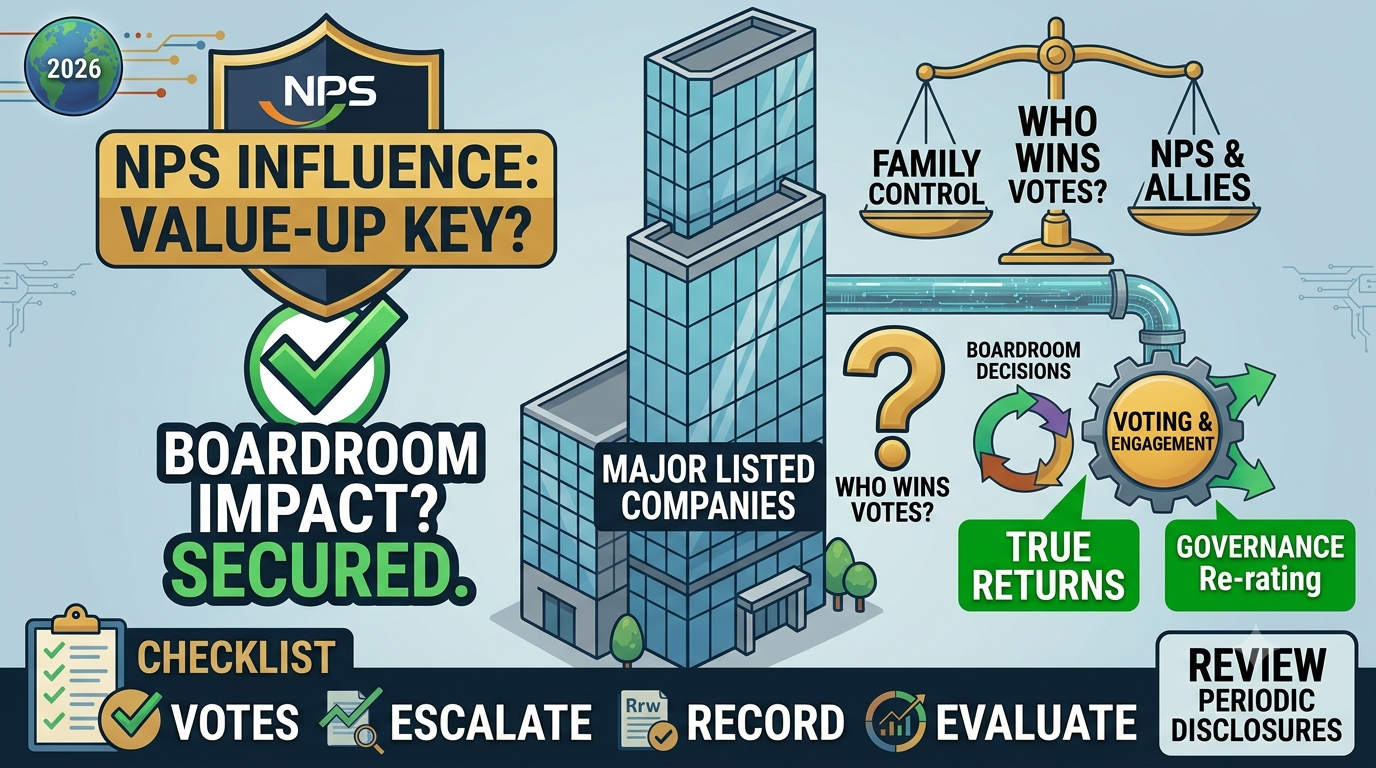
✅ What the Stewardship Framework Covers
- Formal principles for how the fund engages with portfolio companies, including on capital allocation and shareholder return policy
- A disclosed (though not always real-time) voting record on major shareholder resolutions
- Criteria for when the fund escalates from private engagement to public opposition on specific board or management proposals
- Coordination, at least informally, with the broader regulatory push behind the Value-Up Program and Commercial Act reforms
 반응형
반응형Does the NPS Always Vote in Favor of Shareholder-Friendly Proposals?
Not automatically or uniformly — the fund weighs multiple considerations, including its own fiduciary duty to pension beneficiaries, company-specific circumstances, and broader portfolio diversification goals, rather than mechanically supporting every dividend increase or governance proposal. Its voting record should be checked on a company-specific basis rather than assumed.
Frequently Asked Questions
Q1. Is the NPS's voting record publicly disclosed?
A. The fund publishes stewardship and voting disclosures periodically, though the level of granular, real-time detail available publicly is more limited than daily trading flow data.
Q2. Can the NPS's large stakes conflict with its own domestic equity allocation goals?
A. As covered in our NPS liquidity piece, the fund's own domestic equity allocation strategy is a separate consideration from its stewardship/voting activity, though both stem from the same institution and can interact during periods of market stress.
Q3. Does the NPS coordinate directly with government Value-Up policy?
A. The NPS operates with its own governance structure and fiduciary mandate distinct from the FSC's Value-Up Program administration, though both reflect broadly aligned policy goals around improving Korean corporate governance.
반응형'Korean Equities > Dividend & Value-up' 카테고리의 다른 글
How to Check If a Korean Dividend Is Actually Sustainable (0) 2026.08.30 How Chaebol Cross-Shareholding Structures Affect Dividend Policy (0) 2026.08.30 Korean High-Dividend ETFs: An Alternative to Stock-Picking (0) 2026.08.30 How Foreign Investors Can Screen for Korea Value-Up Index (KVI) Stocks (0) 2026.08.28 POSCO Holdings and Korea's Steel Sector Dividends Under Value-Up (0) 2026.08.27
Korean Stock & Equity Research
Data-driven analysis of Korean listed companies, combining financial fundamentals with supply chain and operations insights. Not investment advice.